Showing posts with label Rasam Sambar Kozhambu. Show all posts

Tuesday, April 6, 2010

Chena Ulli Theeyal / Theeyal Recipe With Elephant Yam and Shallots

Theeyal is a typical Kerala curry that goes well with rice and any side dish. I can have theeyal with practically anything though - idli, dosa, or even appam and idiyappam. I don't make Kerala recipes that often, especially kozhambu recipes because TH prefers the tamil kozhambu dishes.


But, when I got a fresh piece of Chena from Little India, I absolutely had to make theeyal so that's how this happened.

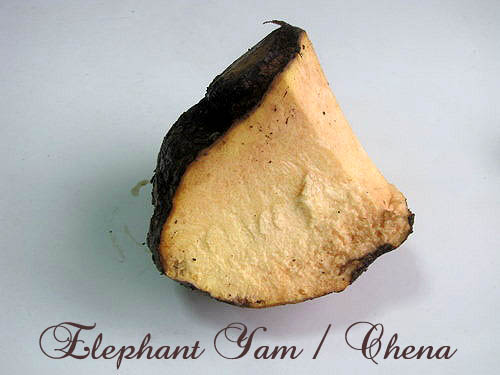
Chena is a pretty popular Kerala ingredient and I love almost anything made with it. Its hard to get fresh chena in Singapore and usually the ones I see are huge and unlike back home, you can't buy just 250gm by cutting off a chunk. You either take the whole thing or don't.

Shallots or ulli, are another star in Kerala cuisine. Its mostly crushed and added to dishes or added whole in gravies like theeyal. Its a pain to peel but for theeyal, I 'd go the extra mile any day!


Ulli theeyal is the most common kind of theeyal although pavakka (bitter gourd) theeyal, kathrikka (brinjal) theeyal and some others are pretty popoular too. I added chena for the extra kick.

Chena Ulli Theeyal
Serves 4

What I Used:

1 cup elephant yam / chena, cut into small cubes
1 cup shallots
1/3 cup tamarind juice (soak tamarind in warm water, extract juice, discard pulp)
Salt to taste

To roast and grind:
1 cup grated coconut (fresh or frozen)
1.5 tbsp coriander powder / malli podi
1/2 tsp  jeera / jeerakam / cumin Powder
1 tsp chilli powder (or to taste)
1/2 tsp pepper powder
A pinch of turmeric powder
A pinch of hing / kaayam / asafoetida
1 tsp oil

For tempering:
1/4 tsp mustard seeds
A few fenugreek seeds / uluva
2 dry red chillies
A few curry leaves
2 tsp (coconut) oil

How I Made It:

1. Heat oil for roasting the powders. Add coconut first and roast until dark brown (a minute short of burning). Then add all the powders, fry for another 10 seconds or so and remove from fire. Cool and grind first to a coarse powder and then add some water and grind to a smooth paste.

2. In a kadai, add the tamarind juice + 1 cup water, shallots and the yam. Bring to boil and add the ground masala paste. Simmer for 10-15 mins until desired consistency is achieved. I like this on the thicker side so I boil until its fairly thick but you can stop after 10 mins or so if you prefer. Add salt and mix well. Remove from fire.

3. Heat oil for tempering and add all the ingredients. Make sure that the fenugreek seeds don't burn, it will turn the curry bitter. When the mustard seeds pop, you can dunk it into the curry. Mix well.
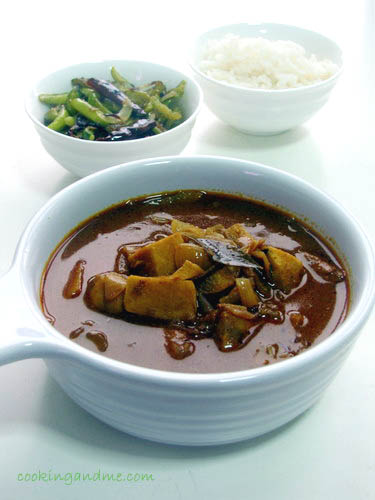

Serve with warm rice and any side dish. I served it with rice and kovakka mezhukkupuratti.

Wednesday, March 31, 2010

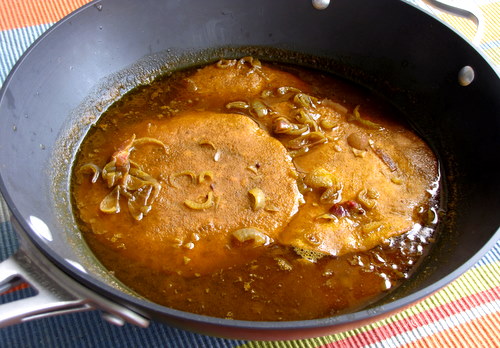
Egg Lentil Omelettes in Gravy / Guddu Thattu Posinti Recipe

I don't know how to name this recipe actually. Its my grandmom's recipe and I am not sure if anyone has eaten this or a variation of this. We call it Guddu Thattu Posinti and its very infrequently made, making it an extra treat. I had a craving for it one day so called up amma, got the recipe and made it immediately.


Note: this is a slightly time consuming recipe to make but totally worth the effort. 

Egg Lentil Omelettes in Gravy / Guddu Thattu Posinti Recipe
Serves 4

What I Used:

For the omelettes:

3 eggs
A pinch of salt

To grind to paste:
1/4 cup toor dal, soaked for atleast 2 hours
2-3  green chillies
1" piece of ginger
5-6 shallots / pearl onions


For the gravy:

1 cup tamarind juice (a lime-sized ball of tamarind soaked in water and juice extracted)
Salt to taste

To roast and grind:
1/4 cup grated coconut
1 tbsp channa dal / kadala paruppu
1 tbsp coriander powder / malli podi
1 tsp red chilli powder
A pinch of turmeric powder
1 tsp oil

For tempering:
1/2 tsp mustard seeds / kaduku
6 shallots / pearl onions, sliced thin
A pinch of hing / asafoetida
A few curry leaves
2 red chillies, torn into halves
2 tsp oil

How I Made It:

Let's do the gravy first.

1. Roast and grind all the ingredients under that list. In a pan, add this ground masala along with the tamarind juice and salt. Bring to boil and let it simmer for 5 mins. The gravy shouldnt get too watery nor too thick, the consistency should be thicker than rasam but thinner than kozhambu.

2. Heat oil for tempering and add all the ingredients. When the mustard seeds pop and the shallots turn golden, add to the gravy and set aside.

Now for the omelettes.

3. Grind the ingredients under list for omelettes.


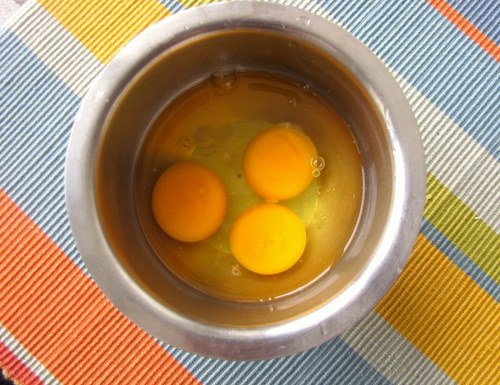
4. Break the eggs into a bowl.


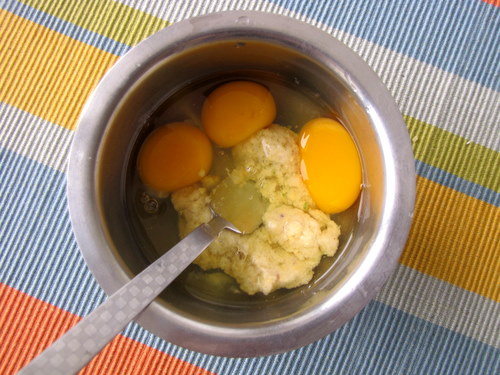
5. Add the ground lentil paste.


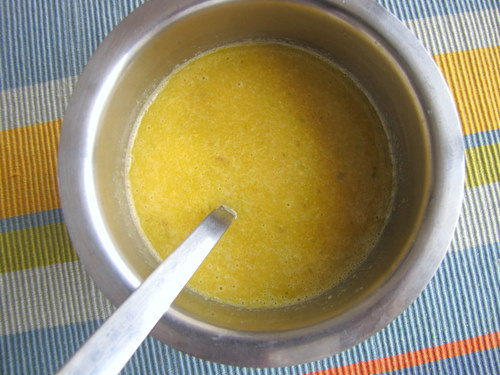
6. Beat well for a minute with salt.


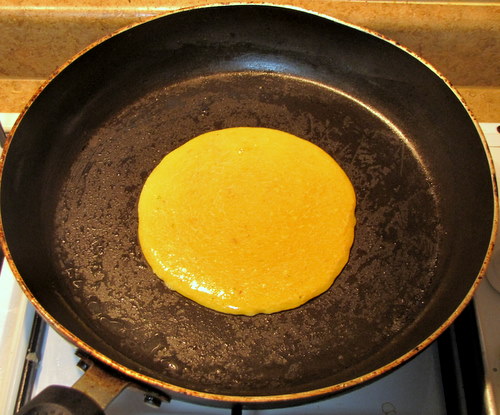
7. Make into small omelettes by pouring 2 tbsp of the egg mixture at a time onto a lightly oiled pan.


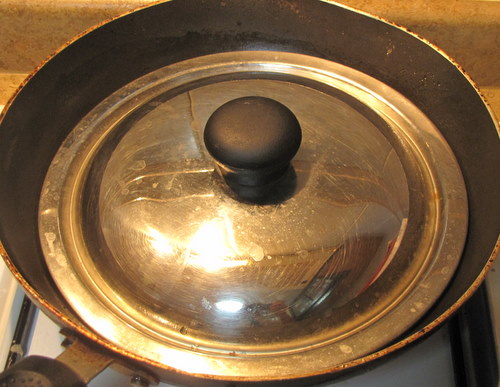
8. Cook closed to maintain softness.


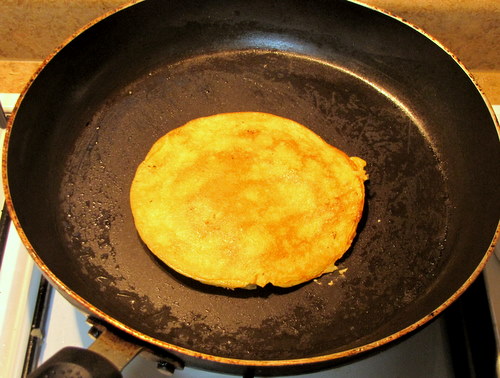
9. Flip over when one side is browned.


10. You should get about 5-6 omelettes with this quantity of ingredients.


11. Phew, ok last step. Dunk in the omelettes in the prepared gravy and serve after an hour or two with steamed rice.

Thursday, February 25, 2010

The one where I am bored but also includes Tomato Saar Recipe Link

Yes, I am bored. Of what? Of:

- blogging regular every-day recipes like rasam and sambar and paratha and paneer butter masala.
- looking at the same old template that this site has been stuck with since the middle of last year (or has it been longer?).
- looking at my Reader chock full of blogs I am yet to read simply because I am too tired or busy to comment and I hate leaving a site without commenting. I have to say something (only genuine stuff though, don't worry).

What does this mean?

I think the content of this site needs some serious overhaul. I am going to look for those gems out there. In other blogs and sites, in cookbooks, in relatives' kitchens, everywhere! Recipes that are not run-of-the-mill. Recipes that are quick or are worth the extra time you may need to spend on them.

I only have two more recipes in my draft, one is the tomato saar that's coming up and the next one is Methi Paratha so don't tease me when I post that because a Methi Paratha recipe is anything but radical.

But.

This is like a resolution I have for the blog so let's see how it goes. For now, I am going to leave the template alone. God knows how obsessed I can get when I start editing it.


Now onto the Tomato Saar Recipe. This is directly lifted from Arch's blog, The Yum Factor. Tried it based on SJ's reco and loved it. Thanks Arch!

Wednesday, February 10, 2010

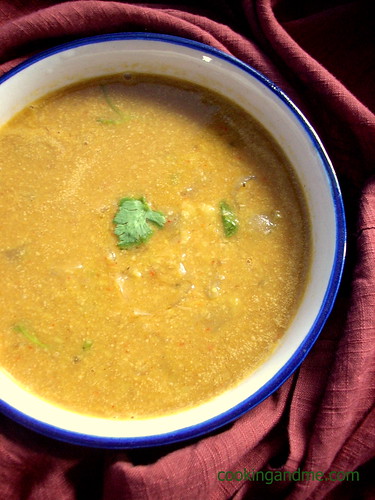
Lemon Rasam Recipe

My mom only makes one kind of rasam. Its watery, peppery, has no dal, and is ready in 7 mins flat. After getting married to a Tam Brahm I realized there are close to a gazillion different types of rasam and then some more. If dal or paruppu is added to rasam back home then we explicitly call it paruppu rasam and it resembles sambar, although taste-wise, its quite different.

Anyway, long story short, now I am introduced to the world of rasam where every single variety has a unique taste not just on the ingredients used but also depending on who makes it. Isn't that mindbogglingly amazing? 

Let's just say yes and move on shall we. 

Ingredients for lemon rasam

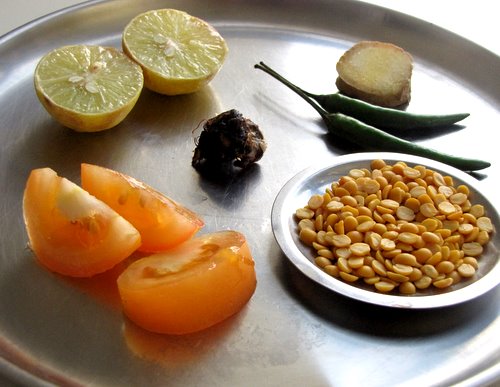
Lemon rasam is interesting to me for two reasons. Lemon or lime totally rocks. Although I would still choose a molten chocolate cake over a lemon pie for dessert, as a fruit, I respect lemon. It really packs a lot of stuff in its small yellow self. Another reason why this lemon rasam calls out to me is addition of fresh ginger. Gotta love that. 

I have tried this rasam with and without adding cooked toor dal. The lighter version makes for a quick and easy kozhambu on weeknights and the other can be made if you are serving with a light vegetable curry on the side and nothing much else. 


Lemon Rasam Recipe
Source: TH's mom aka repository of unending rasam recipes

What I Used:
1 marble-sized ball of tamarind (remember the lemon will make the rasam more sour)
Half a lemon
1/2 cup cooked and mashed toor dal / thuvaram paruppu / pigeon peas (optional)
1 small tomato, chopped
A 1" piece of ginger, cut into small pieces
2 green chillies, or to taste
2 tsp sambar cum rasam powderA pinch of turmeric powder
Salt to taste

For tempering:
1 tsp ghee or oil
Some mustard seeds
A pinch of asafoetida / hing / perungaayam
Curry leaves
Coriander leaves (for garnish) 

How I Made It:

1. Soak the tamarind in 1 cup warm water for 10 minutes. Kneading with your fingertips, extract juice and discard pulp. 

2. Take the tamarind extract in a bowl and add the chopped tomatoes, dal if using, slit green chillies, ginger, sambar cum rasam powder, turmeric powder and some salt. Bring to boil and simmer on low fire for 10 mins. Mash up the tomato well once its cooked and soft.  

3. Next add another cup of water. Bring to boil. Test salt and tanginess. Remove from fire and while hot, add the juice from half a lemon. 

4. Heat a small kadai and add the ghee or oil for tempering. Add all other ingredients and when the mustard seeds start popping, dunk into the rasam.
Serve hot with white rice and paruppu usili. 


Tuesday, November 3, 2009

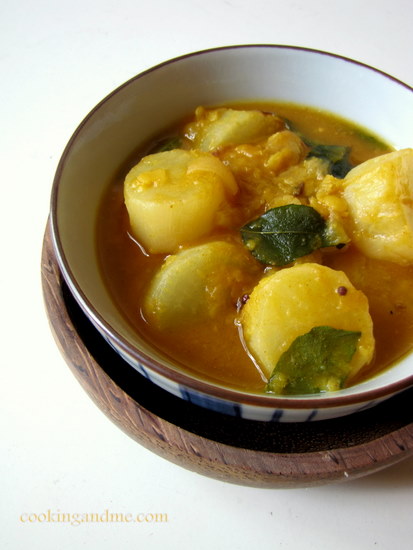
Mullangi Sambar / Radish Sambar Recipe

A trip to Little India is always much looked forward to, especially because of the fresh and cheap 'Indian' vegetables that are available in every nook and corner of the place. A typical trip to Little India will comprise of a 1-hour long elbowing through the grocery section of Mustafa, a good Indian dinner at Murugan Idli Kadai, Anjappar or one of those super-crowded Indian restaurants in Little India.

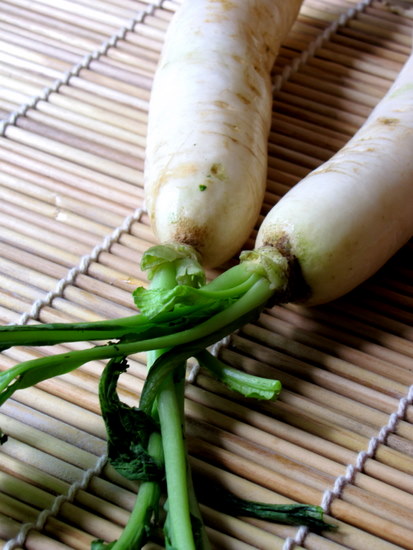
The last time we went, I saw some freshly dug up radishes in the Indian vegetable store (this pic was taken 3 days after the shopping day so the shoots have wilted) and I had to buy them. I was thinking mooli paratha when I bought some, but the moment TH saw them, he said "ahh, we can have some nice mullangi sambar tomorrow!"

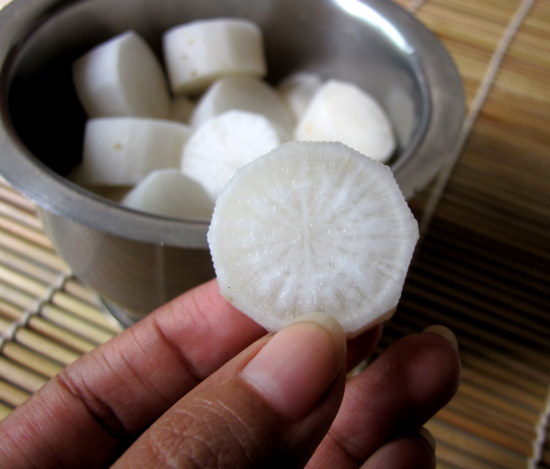
So mullangi sambar it was! Check out the lovely patterns on the radish pieces, they are so pretty!

Sambar is a very popular South Indian dish that is primarily toor dal and tamarind pulp and sambar powder (a blend of spices, sambar powder recipe here). Depending on what vegetable(s) you add to it, the flavour changes. In Kerala, there is only one kind of sambar because we believe in using mixed vegetables in it and this joins the other curries and theeyals that we keep rotating through the week.

In Tamil Nadu, the story is entirely different since sambar is often made on a daily basis and the vegetables rotated for some variation. Arachuvitta sambar is one of those variations that also has coconut added for a kick.

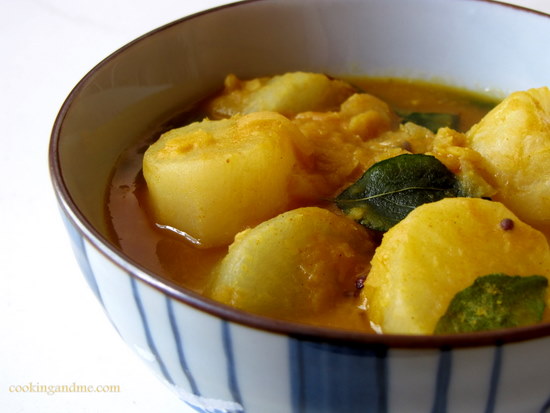
This is the first time I am making and tasting mullangi sambar and let's just say the radish added a lovely flavour to the versatile sambar!

Mullangi Sambar / Radish Sambar Recipe
Preparation time: 30-40 mins
Serves: 4

What I Used:

1 cup toor dal
2 white radishes, cut into 1" thick discs
8-10 shallots / pearl onions (or 1 red onion cut into chunks)
1 lime-sized ball of tamarind
1 tbsp sambar powder
1 generous pinch of hing / asafoetida / perungaayam
1 pinch of turmeric powder
1/4 tsp sugar or 1/2 tsp grated jaggery

For tempering:

1 tbsp oil or ghee
A few curry leaves
2 shallots/pearl onions cut into long slivers
1/2 tsp mustard seeds
1/2 tsp jeera / jeerakam / cumin seeds

How I Made It:

1. Pressure cook the toor dal with 2 cups water, the radish pieces and pearl onions for 3 whistles. Make sure that you regulate the cooking time depending on your cooker because otherwise the radish will get mushy and mix with the dal. Mine's an ooold cooker so no risk of that ;)

2. Soak the tamarind in 1/2 cup warm water for 10 mins and extract the juice, discarding the pulp.

3. Once the pressure leaves the cooker, open and add the tamarind juice, turmeric, hing and sambar powder. Bring to boil on a medium flame, stirring gently just to mix the ingredients. If the sambar seems too thick at this point, add some water.

4. Let the sambar boil for about 7 - 10 mins until it all comes together and switch off fire.

5. Heat the oil/ghee for tempering and add all other ingredients. Once the mustard pops and the shallots turn a light brown, remove from fire and add to the sambar. Mix well.

6. Optionally, you can garnish with chopped fresh coriander leaves. This changes the flavour of the sambar and takes it in a different direction :)


Serve hot with steamed rice and appalam/vadaam.

Sunday, August 23, 2009

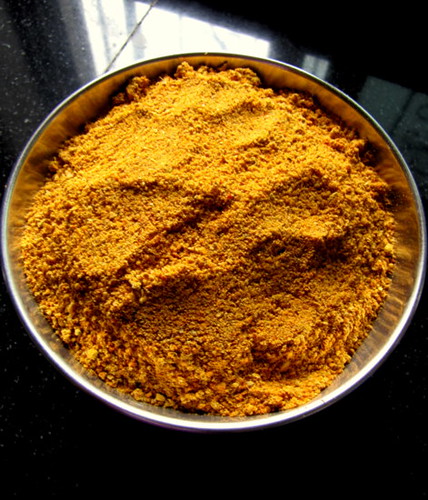
Instant Sambar Powder Recipe

My mom-in-law has three sisters, each of them different and unique in their own ways. During this trip, TH and I stayed in Bombay with her elder sister, Geetha Perima. She is a cooking wiz, makes her own ghee in 10 mins flat, always has pickles, thokku and different kozhambu pastes in her fridge - all homemade, and makes ice-cream which makes one wonder why we ever buy ice cream! She makes all of this seem extremely simple too.

One recipe of hers that immediately caught my attention is the instant sambar powder recipe. Her son is studying in the US and recently, she sent him this powder. All you need to do is add it to boiling water with your choice of vegetable(s) and chopped onions if you like them. The powder has all other ingredients for a sambar, like toor dal, tamarind, chilly powder, hing, etc etc.

Here's how you can make this powder. Great for lazy people, working folks and of course, for you to pack it for your son/daughter who is moving abroad and needs a quick fix of homemade sambar in no time!

Geetha Perima's Instant Sambar Powder
Makes about 1.5kg powder

What She Used:

1kg toor dal
100 gm dhania / malli / coriander
25gm channa dal / bengal gram / kadala paruppu
50 gm dry red chillies
10gm fenugreek seeds / uluva / menthayam
A large lime-sized ball of tamarind
2 tbsp whole black pepper
2 tsp jeera
1 tsp hing / asafoetida / perungayam
1 tsp Kashmiri chilli powder (optional, added for the colour)

How She Made It:

1. Heat about 2 tsp oil in a pan and lightly fry the red chillies. When they start to brown, remove and set aside to cool.

2. Remove all strings and other stuff from the tamarind. Separate into pieces. Add these to the same oil and fry by pressing down, making sure all the sides are roasted. Keep fire on sim and continue to roast for about 5 mins. It will be very soft at this stage. Drain and set aside to cool. You will find that the tamarind has gone crisp and brittle to touch.

3. The other ingredients don't need to be roasted. Starting with the dal, powder each ingredient separately and keep adding to a big bowl. The tamarind will powder nicely once its cool.

4. Mix all ingredients well with salt. Store in an air tight container and use to make easy and quick sambar.

To Use:

To serve two, boil about 3 glasses water and add 2-3 tbsp of the instant sambar powder. Add chopped vegetables and onions. Let it boil on sim until the vegetables are cooked. Serve hot. This powder will make sambar that's a bit watery. If you want it thicker, also add some cooked toor dal while preparing it.

Tuesday, June 23, 2009

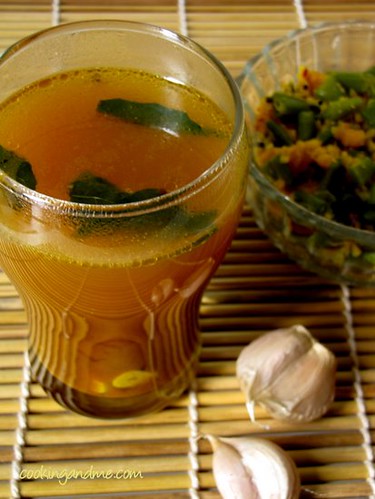
Garlic Rasam / Poondu Rasam Recipe

I suck at making rasam. I know that's a strange thing to say just before sharing a rasam recipe but I had to say it. My rasams usually suck. I have tried watching the MIL closely and writing down measurement of ingredients as and when she uses it. I have tried rasam recipes from different sites all over the blogosphere.

Then my rasam became okay.

That was before I devised this recipe. I stripped down all rasam recipes and came up with this uber simple recipe that really cannot go wrong. (TH actually makes better rasam but he has to add tomatoes to it). And Dal? What dal? I never add dal to rasam unless I am making this version which I call parippu rasam.

So in a nutshell, this rasam recipe goes against most Brahmin rules of making rasam:

- no toor dal / tuvaram paruppu (gasp)
- addition of garlic / poondu (double gasp)
- use of readymade rasam powder

Maybe I should rename the recipe mulagutawney like those fancy restaurants. Anyway.. If you don't want to add dal to your rasam, make it without dal. Go ahead, dare yourself ;)

Garlic Rasam / Poondu Rasam Recipe
Preparation time: 20 mins
Serves: 2


What I Used:

A small lime-sized ball tamarind
8 pods garlic, chopped (use as much or as little as you want)
1 ripe tomato
1 tbsp rasam powder (mine has chilly powder so if yours doesn't, add chilly powder to taste)
A generoud pinch of hing / asafoetida
1/2 tsp turmeric powder
1/2 tsp jaggery or sugar
Salt to taste

For tempering:

2 tsp ghee / clarified butter (or oil)
1/2 tsp mustard seeds
A few curry leaves

How I Made It:

1. Soak the tamarind in 1 cup warm water for 10 mins. Extract juice and discard pulp. Add another cup of water to the tamarind juice.

2. Chop the tomato and mash it well with your finger tips.

3. Place the tamarind juice, tomatoes, turmeric powder, salt, hing, rasam powder and the garlic pods in a pan and bring to boil. Once it boils, lower fire and let it simmmer, keeping the pan open.

4. Once the mixture has simmered for about 15 mins, add sugar and adjust salt. Remove from fire.

5. Heat the ghee and add the mustard seeds and curry leaves. Once the seeds start to pop, add to the boiled tamarind mixture. Mix well.

Serve piping hot with steamed white rice and paruppu usili or drink straight from a glass.

Sunday, May 10, 2009

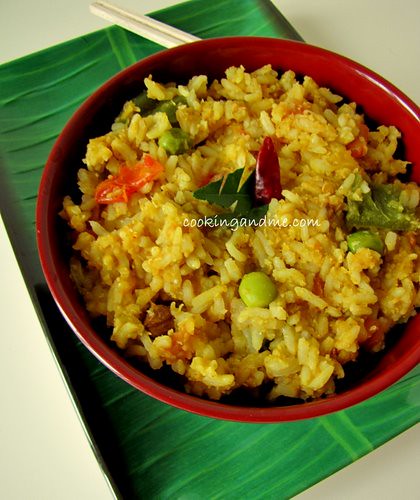
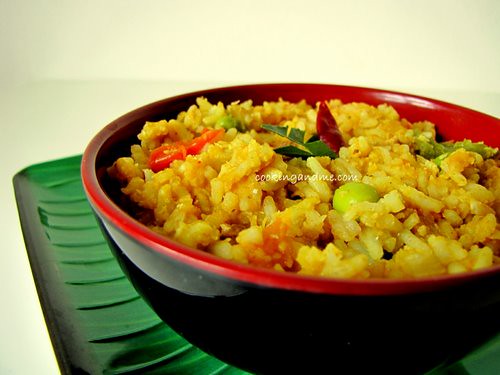
Easy Bisi Bele Bath / Sambar Sadam Recipe

Though I have always loved vatha kozhambu and theeyals better than sambar, ever since I started cooking on my own, I love sambar! However, making sambar on a weeknight means also making a thoran or poriyal to go with it. Sambar sadam or Bise Bele Bath is the quick answer for that. Add in all the vegetables you have in hand and there you go - a nutritious one-dish meal in no time that's very forgiving when it comes to what vegetables you add to it.

Here's how I make mine.

Bisi Bele Bath / Sambar Sadam Recipe
Serves 2-3
Preparation time - 15 mins
Special utensil needed - pressure cooker


What I Use:

Rice - 1.5 cups
I use ponni or basmati but the regular rice you use every day will work just fine.
Toor / tuvar / kandi pappu / pigeon peas - 3/4 to 1 cup
Tamarind - a marble-sized ball or 2 tbsp tamarind paste
Chopped vegetables - 1.5 cups
You can use any vegetables you have in hand like French beans, carrots, potatoes, peas, tomatoes, drumstick, capsicum, etc.
Shallots - 6 (optional)
Green chillies - 2
Sambar powder - 1.5 to 2 tbsp
Hing / Asafoetida / Perungayam - 1/2 tsp
Turmeric powder - a pinch

For tempering:

Oil - 1 tbsp
Mustard seeds - 1 tsp
Curry leaves - a few
Shallots - 2, sliced thin (optional)

How I Make It:

1. Add 1 cup warm water to the tamarind and extract juice. Discard pulp. If using tamarind paste, dissolve it in 1 cup water without any lumps.

2. Heat oil for tempering in the pressure cooker pan and add the rest of the ingredients. Fry the shallots for tempering, if using, until golden brown. Then add the hing, green chillies, turmeric and sambar powder and mix well for 10 seconds.

3. Add all the ingredients and sufficient water. To cook the rice I use every day, the ratio of rice:water is 1:2. Since I have used 1.5 cups rice here, I need 3 cups water in total. Tamarind juice is in 1 cup water so I added approximately 2 more cups of water to the cooker. Its fine if its slightly more than that.

4. Cook for 3 whistles. If you like your sambar sadam a bit mushy, then cook for 4 whistles and make sure you add slightly more water than specified above.

5. Wait till pressure leaves and serve hot with vadaam / chips / appalam and raita / curd.


This goes to Mahimaa's 15-Minute Cooking Event, EC's WYF - Quick Meals.

Tuesday, January 6, 2009

Arachuvitta Sambar

Arachuvitta sambar literally means sambar to which ground spices are added. The name itself is so traditional and delicious to me! This is a tried and tested recipe that works like a charm. The last time I made it, I made a note of the amount of ingredients I am putting in because normally for sambar, I throw in stuff and it comes out well invariably. This is a slightly more tedious sambar than how I normally make it but well worth the effort, as always :) TH loves to have this with curd rice, since I make it slightly thicker than normal.


What I Used:

Toor dal / tuvar dal / thuvaram paruppu - 1/2 cup
Shallots / small onions - 1/2 cup, halved or quartered
Tamarind paste – 3 tbsp (or a marble sized amount soaked and squeezed in half cup water)
Asafoetida / hing / kaayam / perungayam - 1/4 tsp
Turmeric powder - a pinch
Mustard seeds – ½ tsp
Curry leaves - a few
Salt - to taste
Oil – 2 tsp
Chopped fresh coriander leaves - for garnishing

Roast, cool and grind for masala mix

Coriander seeds / malli – 2 tbsp
Grated coconut (fresh or dessicated) - 2 tbsp
Chana dal – 1 tbsp
Dried red chillies – 6
Fenugreek seeds / methi seeds / uluva / menthayam – ¼ tsp (or a little less)
Curry leaves - a few
Oil - 1 tsp
How I Made It:

1. Pressure cook the dal in 3 cups water for 3 whistles.

2. Roast and grind the masala mix and set aside.

3. Heat 2 tsp oil in a heavy-bottomed pan and temper mustard seeds until they pop. Add curry leaves and chopped shallots and fry for a minute. Then add turmeric and hing.

4. Add the cooked dal and tamarind paste to the above. Adjust water to get the right consistency. Bring to boil.

5. Now add the ground masala mix and stir well, reducing the fire to sim. Add salt. Let the sambar boil for about 2-3 mins.

6. Remove and garnish with chopped coriander.
Goes well with vada, dosa, idli and steamed rice.

Thursday, October 30, 2008

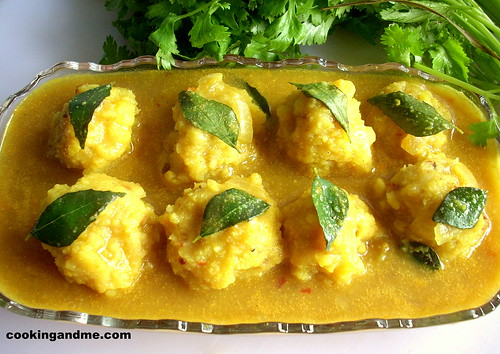
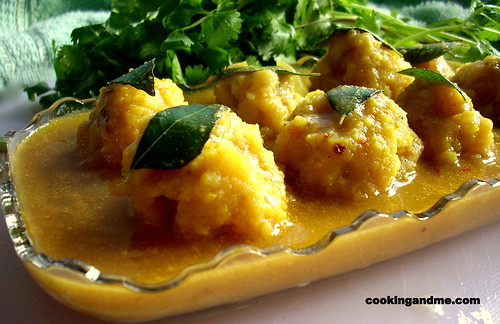
Paruppu Urundai Kuzhambu

Paruppu Urundai Kuzhambu literraly means dal balls in a gravy. As with most tam Brahm recipes, this one has the most common ingredients like toor dal, tamarind, hing and of course sambar powder! 


I have mentioned before how new I was/still am to an extend to Tamil Brahmin cooking. My parents-in-law are here for a visit and that means amma takes care of all the cooking and dinner is ready by the time I get back from office. Bliss. But, I told her first off that I wanted to watch her making Paruppu Urundai Kuzhambu. The dish features dal balls in a tangy tamarind sauce. Though it looks a bit like kofta curry, the recipe couldn't be further from it. Amma had given me the recipe long back and I tried it once but the dal balls (urundai) dissolved in the sauce and it ended up like sambar in the end. It does take some practise to get it right and what better way to learn than by watching!


What We Used:

Toor Dal – 1 cup, soaked in water for atleast 1 hour
Onion- 1 small, minced
Hing - 1/4 tsp
Dried red chillies - 3 to 4
Salt – 1 tsp

Tamarind water - 2 cups (or 2 tbsp tamarind paste dissolved in 2 cups water)
Grated coconut (fresh or frozen) - 1/4 cup, ground to a paste in little water
Sambar powder- 1 heaped tbsp
Turmeric powder - 1/4 tsp
Hing - a pinch
Oil - 1 tbsp
Mustard – 1/2 tsp
Curry leaves – a few
Salt - to taste
How We Made It:

1. Take a heavy-bottomed pan that's preferably evenly shaped at the bottom (so that the dal balls cook evenly). Pour in the tamarind water and add turmeric and salt. Bring to a boil.

2. Then add the hing, sambar powder and ground coconut and let it boil on low flame.

3. Meanwhile, rinse the soaked toor dal completely and grind it with red chillies, hing and salt, without adding any water.

4. Mix in the minced onions to the above dal paste and make small lemon-sized balls with it.

5. Add the dal balls one by one, slowly, into the boiling sauce. Do not mix around too much or else the balls will crumble. If you are trying this for the first time, add one or two balls at a time and then keep adding more.

6. Now its time to be patient and wait for the dal balls to cook. They will almost double in size as they boil in the sauce and the sauce will thicken as well.

7. Once the dal balls are cooked (will take about 15-20 mins), temper mustard seeds in some oil, add curry leaves and transfer to the boiling kuzhambu.

8. Remove from fire and serve hot.

We made this kuzhambu last weekend and though I didn't have a flat bottomed pan which brings out the best results, the kadai worked pretty okay too. We had to keep stirring the balls gently so that it cooks evenly. If you are making this for the first time, you can also try steaming the balls before dropping in the sauce. This will prevent break-age. I will let you know how it comes out when I try it on my own next :D

-------------------------------------------------------------------

There is something else that I kept forgetting to mention in my previous posts so doing so now. Better late than never. Mansi of Fun and Food had hosted a Healthy Recipes Contest and I won! She sent me this amazing book and I want to thank her for hosting and everyone who voted.

But wait! What's the recipe that won? Click here to find out!

Wednesday, October 22, 2008

Easy Vathal Kuzhambu

This tangy South Indian specialty gets its name from Vathal which is vegetables sun dried and then added to the gravy for flavour. The common vathal is made with sundakka (Turkey Berry), vendakka (Okra) or manathakkali (interestingly known as black nightshade in english). You can also add vegetables like brinjal or drumsticks for a different flavour.

I had been using the MTR ready mix since I came to Singapore but decided to make the authentic version. I wasn't very confident since this is a very authentic recipe and may not come out well during the first try. I searched online and came across this relatively simple version that didn't require any grinding or roasting and decided to give it a shot.

It came out much better than I expected so this one is definitely a keeper.

What I Used:

Shallots -12, halved or whole if not too big
Vathal/Drumsticks/Aubergine - 1/2 cup (you can add pretty much any of these in the kozhambu for a unique flavour)
Tamarind paste - 2 tbsp (or half cup tamarind water made by squeezing a lemon sized tamarind ball in luke warm water)
Fenugreek/venthayam/uluva - 1/4 tsp
Sesame oil - 3 tbsp
Peppercorn - 1tsp
Sambar powder - 2 tsp
Salt - to taste
For tempering:
Mustard seeds - 1/4 tsp
Urad dal - 1/2 tsp
Curry leaves - a few

For thickening:
Either 1 tbsp urad dal roasted and powdered OR 1 tbsp rice flour mixed with some water.
How I Made It:

1. Heat the oil in a heavy-bottomed pan temper mustard seeds, urad dal and curry leaves.
2. Then add the shallots and any vegetable or vathal you are using and fry for about 2 minutes.
3. Add the sambar powder and peppercorn and fry for another 30 seconds.
4. Add the tamarind water and water and allow to boil on low flame for 8-10 minutes.
5. Add the thickening ingredients of choice and let boil for another 3-4 minutes.
Serve hot with steamed white rice and ghee drizzled on top.

Tuesday, October 7, 2008

Kadala Kozhambu / Chickpeas in Coconut Milk

Today is a my mom-in-law's b'day and I wanted to do something for her that would be meaningful to both of us. Before I go any further I have to say how lovely she is to me, like my own mom :)

She is an amazing cook too and this is one of the first recipes I learnt from her since TH loves it. Its simple and looks mild but is amazingly flavourful, just like all her dishes are. She is super fast in the kitchen and is normally done cooking for the day by the time I am up (err.. which is around 7 in the morning :D).

So here is to her and her special day. Happy B'day Amma :)

Chickpeas / Kabuli Chana

What I Used (Serves 2-3 people):

Chickpeas/Kabuli Chana - 1/2 cup

Thick coconut milk - 3/4 cup

Tamarind - one marble sized ball (or 2tbsp if you are using paste)

Sambar cum rasam powder - 1 tbsp - I told you its versatile, and has more uses than just in sambar and rasam ;)

- if using your own sambar powder, use 1/2 tsp and 1/2 tsp red chilli powder.

Turmeric powder - a pinch

Hing/Asafoetida/Kayam - 1/2 tsp

Salt - to taste

Oil and mustard seeds - for tempering

How I Made It:

1. Soak the chickpeas overnight in 3 cups water. Pressure cook and keep aside.

2. Use 1/2 cup warm water and blend the tamarind with your hand to extract the juice. If using paste, dilute it in 1/2 cup water.

3. Heat a pan and bring the tamarind water to boil. Add turmeric powder, hing, salt and the sambar powder to this. Sim and let it boil for 10 minutes.

4. Add the cooked chickpeas and boil for another 10 mins.

5. Remove from fire, add coconut milk and mix well. Adjust salt.

6. Heat some oil in a small saucepan and temper some mustard seeds. While hot, pour on the above gravy and mix well. You can even use some curry leaves at this stage.

Kadala Kuzhambu

Serve hot with rice. TH loves it with parippu usili.

This special dish goes to Sra's Event - Legume Love Affair, conceptualized by Susan.

Thursday, June 19, 2008

Raw Mango and Coconut Gravy/Pacha Manga Curry

When it comes to making a kozhambu/chaaru curry/gravy for rice, I am normally stumped for choices, not because they aren't many, but because my answer is always sambhar or rasam or both. Yesterday, I tried this Kerala dish - a coconut based gravy with raw mangoes to give it the tangy flavour.


The wet market is overflowing with all kinds of mangoes now, mostly raw. Ripe ones are ridiculously expensive so we just eat them as is without bothering to waste even a morsel making any drinks or dessert out of it :D

Here is what I made with some nice and tangy raw mangoes.


Pacha Manga Curry

What I Used:

Serves 2

Raw mangoes - 1 cup, cubed
Chilli powder - 1 tsp
Turmeric powder - a pinch
Salt - to taste

Grind well together:

Coconut - 1/2 cup
Jeera - 1 tsp
Turmeric powder - one pinch

For tempering:

Mustard seeds - 1/4 tsp
Fenugreek seeds - 1/2 tsp
Curry leaves - 1 sprig
Dry red chillies - 3
Oil - 1 tbsp

How I Made It:

1. Close the lid and cook the mangoes in some water by adding turmeric and chilly powder, till they are tender.

2. Add the ground coconut and jeera mixture to this with some more water and bring to boil keeping the kadai open. Cook till the raw smell leaves the curry.

3. Temper the mustard, fenugreek, curry leaves and chillies and add to the above curry before removing from fire.

Note: if the mangoes are not sour enough, use some tamarind paste to increase the flavour. I used fresh raw mangoes that were sour enough so didn't need to do that.

This tangy gravy goes to Meeta for her Monthly Mingle that's all about mangoes this month.

Tuesday, February 12, 2008

Chow Chow Sambhar with Curd Rice

I saw this vegetable - chow chow aka chayote squash - in Reliance Fresh and immediately wanted to try it out. I had heard about chow chow bhath but I had a certain someone visiting me over the weekend and he is not much of a variety rice person. So we decided on a simple chow chow sambhar to be served with curd rice.


Chow chow/Chayote Squash

Chow chow is rich in Vitamin C and potassium, and 1 cup counts for around 40 calories. The vegetable in itself is quite tasteless but chow chow bhath and chow chow koottu seem to be quite popular, especially in the Andhra cuisine.


Chow chow cut into half

Here is the recipe for Chow Chow Sambhar (Chayote Squash Cooked with Lentils)

What I Used:

Chow chow - one, cubed
Toor dal - 1/2 cup
Water - 2 cups
Turmeric - one pinch
Green chillies - 2, slit on the sides
Onion - 1
Salt - to taste
Tamarind paste - 1 tbsp
Sambhar powder - 1 tbsp

For Seasoning

Mustard seeds, curry leaves, chilly powder, chopped coriander leaves.

How I Made It:

1. Pressure cook the dal with chillies, turmeric, cubed onions, and chow chow.

2. Add tamarind paste to the cooked dal. Also add the sambhar powder. Adjust water to get the consistency you like.

3. Heat oil in a separate kadai, add mustard seeds, chilly powder and curry leaves and fry for 10 seconds. Add to the dal mixture. Mix well. Garnish with chopped coriander leaves.


Chow chow sambhar with curd rice

I served it with some curd rice.

Monday, November 5, 2007

Parippu Rasam/Rasam with Daal

I feel that lunch is incomplete with some 'ozhichu koottan' (gravy, for lack of a better word) to go with it. The most common ones I make are sambhar, rasam and dal. It was gettng quite boring so this weekend, I decided to mix-n-match and make parippu rasam. I made the consistency slightly thicker than normal, the way I like it.


What I Used:

Toor dal/tuvar dal - 1/4 cup
Tamarind paste - 2 tbsp
Rasam Powder - 2 tsp
Red chillies - 4
Turmeric - 1/2 tsp
Crushed garlic - 8 cloves
Water - 1 1/2 cups

How I Made It:

1. Pressure cook the dal well with turmeric. Once done, mash it well and keep aside.

2. In a little oil, cackle the mustard seeds, add the red chillies and garlic and fry for a minute. Then add the rasam powder and fry for another minute.

3. Mix the dal and add the tamarind paste with the water. Adjust the water at this stage to have the consistency you desire.

4. Bring water to boil, add required salt and remove from fire.

5. Garnish with fresh coriander leaves.

Serve hot with steamed rice.

Thanks to all those who commented on this post and told me about the JFI ingredient this month. I am really pleased to send this to Linda of Out of the Garden for JFI - Toor Dal.

This simple dish also goes to the event Powerless Cooking hosted by easycrafts of Simple Indian Cooking. The idea is to cook a dish without the use of any electrical appliances .

I am away for 5 days Diwali vacation but will be back next week with some entries to your events out there. Don't forget to keep sending in your entries to WBB #17 - Cornflakes. I will respond to your messages and emails as soon as I am back.

Thursday, September 27, 2007

Pepper Rasam and Potato Masala - Simple Sunday Lunch

I had a terribly sore throat last weekend and roaming around entire day Saturday for a friend's birthday, didn't help it much. Sunday morning, I felt all crappy and grumbly. I started craving hot rasam right about then. There were no vegetables in the house and we were too lazy to go out and get any. That's when the potatoes came handy. Quickly whipped up a lunch of pepper rasam, potato masala and rice.

Pepper Rasam


What I Used:

Tamarind paste - 1 tbsp
Freshly ground peppercorns - 1 tsp
Garlic - 5-6 cloves, freshly pounded
Rasam powder (I am currently using MTR) - 1.5 tbsp
Water - as required
Salt - to taste
Fresh coriander leaves - for seasoning
Curry leaves - one strand


How I Made It:

1. Heat oil and temper with mustard seeds and fenugreek seeds. I love the smell of fenugreek seeds as they are roasted. Make sure they are not burnt at this stage. Add the garlic and fry for a minute.

2. Then add the curry leaves and the rasam powder, fry for a good 2 minutes.

3. Add necessary amount of water and when it heats up, add the tamarind paste and stir well. When the water boils, add the pepper.

4. Don't boil for too long. Add salt, remove from fire and season with coriander leaves.

Pepper is ideal when we have a bad throat or a cold. I always crave rasam when I am feeling feverish. With rice, its not really a favourite.

Potato Masala


Me and my roomie made it exactly the way we make egg curry. Boil the potatoes and add it on just you do with the eggs. We love that gravy and though its not the best combination with rasam, we still enjoyed it.

By the way, you have three more days to send in your entries to Show Me Your Cook Books Event :)

Monday, September 10, 2007

Rice with Bele Saaru & Badanekayi/Ennegayi Palya - A Kannadiga Lunch!

I enjoy cooking for Regional Cuisine of India the most, mainly because it gives me an opportunity to take a peek into some really cool names of vegetables, dishes and even ethnic recipes. I loved researching for Karnataka recipes and as always settled for something easy, yet something I would want to cook again cuz it turned out really well.

Here is our Sunday lunch - a simple Kannadiga one!


I. Bele Saaru

The lovely Karnataka style sambhar with a unique sweet flavour contributed by jaggery. The consistency is supposed to be thicker than rasam but thinner than normal sambhar, but since we like it on the thicker side, I made it that way. I am especially proud of the fact that I made the saarina pudi from scratch (like I have mentioned a lot of times already :D). Forgive me, but making curry powders from scratch is a huge deal for me :D


What I Used:

Toor dal - 1/2 cup
Tamarind paste - 2 tsp
Jaggery powder - 2 tsp
Saarina pudi - 2 spoons
Turmeric powder - 1/4 tsp
Chilly powder - 1/2 tsp
Green chillies - 3
Drumsticks - 1
Salt - to taste
Curry leaves - one strand

How I Made It:

1. Pressure cook the dal with turmeric powder, drumsticks cut into long pieces, green chillies and sufficient water.

2. Once the excess pressure has left the cooker, adjust the consistency by adding water if necessary. Then add the tamarind paste and jaggery and mix well.

3. Temper mustard seeds, curry leaves, saarina pudi, chilly powder in some oil and when it emits a nice smell, add into the above mixture. Mix and serve hot with rice.

Basic recipe courtesy.

II. Bandanekayi/Ennegayi Palya

This is a simple brinjal curry, with a lovely hot & sweet flavour that I thoroughly enjoyed. I know brinjals are not the most popular vegetales around but I like it when its stir-fried in oil. This particular dish goes well with bele saaru and rice.


What I Used:

Ennegayi/brinjal - 5 medium
Onions - 2
Garlic paste - 1 tbsp
Curry leaves - one strand
Jeera powder - 1/2 tsp
Chilly powder - 2 tsp
Hing - one pinch
Tamarind paste - 1 tsp
Jaggery powder - 1 tsp
Turmeric powder - 1/4 tsp
Oil - 2 tbsp
Salt - to taste


How I Made It:

1. Cut the brinjals into cubes and soak them in water with little salt.

2. Heat the oil and add jeera, hing and then onions.Fry a little and then add chilli powder. Fry again before adding the brinjals, tamarind paste, salt and jaggery.

3. Cook keeping the pan covered. When the brinjals are done, add the garam masala, fry for another minute and remove from fire.

4. Serve hot with rice and bele saaru. Atleast, that's what I did :)

Basic recipe courtesy.

I am sending this to RCI: Karnataka, in case you hadn't guessed already. Thank you for hosting, Asha. Good luck with the round-up. I know your inbox is full already :)