Showing posts with label Shallots. Show all posts

Thursday, December 9, 2010

Guacamole Recipe + Winners

I love avocados. Guacamole is something that regularly gets made as a sandwich spread for TH to take to work. In fact, I don't even think I have tried an avocado smoothie at home before, although I have tried some delicious ones all over Singapore. 

DSC_0954-1

Last weekend, uncharacteristically, I made these for brunch on Saturday and the lighting was just perfect for some shots for the blog. I Indianize the recipe quite a bit by using Indian green chillies and shallots in my guacamole. The flavour is amazing and we love it with some toasted bread!
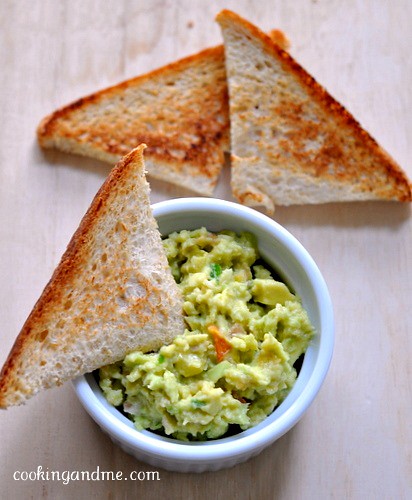
DSC_0943

Guacamole Recipe
Serves 2 / Fills 4 Sandwiches

Ingredients:
1 ripe* avocado
2 shallots
1 Indian green chilli (or a chopped jalapeno)
Half a tomato, deseeded and chopped fine
Juice of half a lemon or 1/4 of a lime
Chopped fresh coriander leaves (optional)
Salt and pepper to taste

How I Made It:

1. Draw a knife deep into the avocado all around it, length-wise. Gently twist it around until the two halves fall apart and the seed is exposed. Remove seed, scoop out the green flesh with a spoon and place in a bowl. Mash well with a fork.

2. Grind the shallots and green chillies in a pestle and mortar (for best taste) or in a small grinder until roughly mixed.

3. Mix with the shallot-chilli paste along with all other ingredients with the avocado. Taste-test to adjust the sourness, saltiness and spice level. I usually adjust the amount of lime and salt to make it just right. It largely depends on personal taste.

4. Serve with tortilla chips, toasted bread wedges, rolled into a chapati, as you wish!

DSC_0980

Notes

- to check if an avocado is right, press lightly near where the shoot end is see if its soft. If its hard there, its definitely not ready for use yet. Another trick is to hold it in your palm and see if it yields to squeezing.

- to make the avocados ripen faster, leave in a brown paper bag and don't refrigerate.

- to prevent browning, the lime juice will help. Some swear by leaving the seed in with the chopped avocados but I haven't tried this yet.

Enjoy this buttery, yummy fruit. Its high in Mono-Unsaturated Fats and apparently helps you lose weight if taken in moderation :)

-----------------------------------------------------------------------------------------------

There were 104 comments on the $25 cooking.com giveaway post. The 2 lucky winners of the coupons are Kalyani and Sadhana Ginde. Ladies, I have contacted you already with the coupon codes so happy shopping and hopefully you share with us what you bought with them.

Disappointed that you didn't win? Please don't be! More giveaways and fun coming your way very soon!!

Tuesday, April 6, 2010

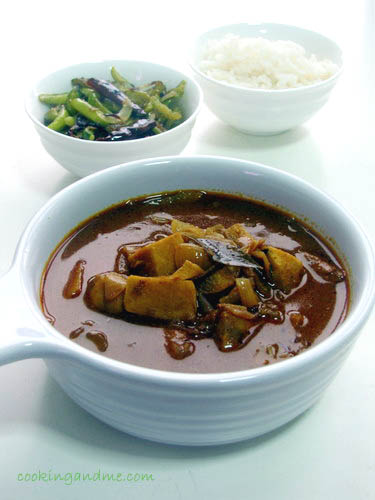
Chena Ulli Theeyal / Theeyal Recipe With Elephant Yam and Shallots

Theeyal is a typical Kerala curry that goes well with rice and any side dish. I can have theeyal with practically anything though - idli, dosa, or even appam and idiyappam. I don't make Kerala recipes that often, especially kozhambu recipes because TH prefers the tamil kozhambu dishes.


But, when I got a fresh piece of Chena from Little India, I absolutely had to make theeyal so that's how this happened.

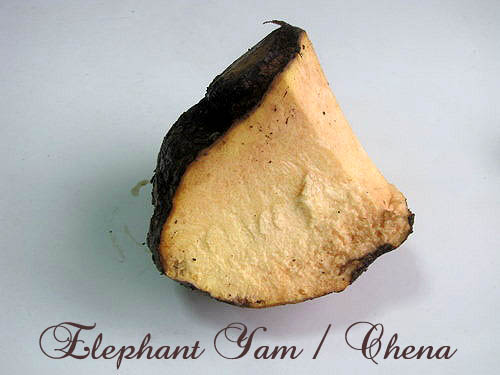
Chena is a pretty popular Kerala ingredient and I love almost anything made with it. Its hard to get fresh chena in Singapore and usually the ones I see are huge and unlike back home, you can't buy just 250gm by cutting off a chunk. You either take the whole thing or don't.


Shallots or ulli, are another star in Kerala cuisine. Its mostly crushed and added to dishes or added whole in gravies like theeyal. Its a pain to peel but for theeyal, I 'd go the extra mile any day!


Ulli theeyal is the most common kind of theeyal although pavakka (bitter gourd) theeyal, kathrikka (brinjal) theeyal and some others are pretty popoular too. I added chena for the extra kick.

Chena Ulli Theeyal
Serves 4

What I Used:

1 cup elephant yam / chena, cut into small cubes
1 cup shallots
1/3 cup tamarind juice (soak tamarind in warm water, extract juice, discard pulp)
Salt to taste

To roast and grind:
1 cup grated coconut (fresh or frozen)
1.5 tbsp coriander powder / malli podi
1/2 tsp  jeera / jeerakam / cumin Powder
1 tsp chilli powder (or to taste)
1/2 tsp pepper powder
A pinch of turmeric powder
A pinch of hing / kaayam / asafoetida
1 tsp oil

For tempering:
1/4 tsp mustard seeds
A few fenugreek seeds / uluva
2 dry red chillies
A few curry leaves
2 tsp (coconut) oil

How I Made It:

1. Heat oil for roasting the powders. Add coconut first and roast until dark brown (a minute short of burning). Then add all the powders, fry for another 10 seconds or so and remove from fire. Cool and grind first to a coarse powder and then add some water and grind to a smooth paste.

2. In a kadai, add the tamarind juice + 1 cup water, shallots and the yam. Bring to boil and add the ground masala paste. Simmer for 10-15 mins until desired consistency is achieved. I like this on the thicker side so I boil until its fairly thick but you can stop after 10 mins or so if you prefer. Add salt and mix well. Remove from fire.

3. Heat oil for tempering and add all the ingredients. Make sure that the fenugreek seeds don't burn, it will turn the curry bitter. When the mustard seeds pop, you can dunk it into the curry. Mix well.


Serve with warm rice and any side dish. I served it with rice and kovakka mezhukkupuratti.

Wednesday, March 31, 2010

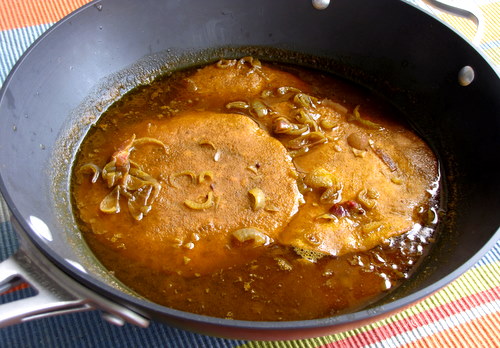
Egg Lentil Omelettes in Gravy / Guddu Thattu Posinti Recipe

I don't know how to name this recipe actually. Its my grandmom's recipe and I am not sure if anyone has eaten this or a variation of this. We call it Guddu Thattu Posinti and its very infrequently made, making it an extra treat. I had a craving for it one day so called up amma, got the recipe and made it immediately.


Note: this is a slightly time consuming recipe to make but totally worth the effort. 

Egg Lentil Omelettes in Gravy / Guddu Thattu Posinti Recipe
Serves 4

What I Used:

For the omelettes:

3 eggs
A pinch of salt

To grind to paste:
1/4 cup toor dal, soaked for atleast 2 hours
2-3  green chillies
1" piece of ginger
5-6 shallots / pearl onions


For the gravy:

1 cup tamarind juice (a lime-sized ball of tamarind soaked in water and juice extracted)
Salt to taste

To roast and grind:
1/4 cup grated coconut
1 tbsp channa dal / kadala paruppu
1 tbsp coriander powder / malli podi
1 tsp red chilli powder
A pinch of turmeric powder
1 tsp oil

For tempering:
1/2 tsp mustard seeds / kaduku
6 shallots / pearl onions, sliced thin
A pinch of hing / asafoetida
A few curry leaves
2 red chillies, torn into halves
2 tsp oil

How I Made It:

Let's do the gravy first.

1. Roast and grind all the ingredients under that list. In a pan, add this ground masala along with the tamarind juice and salt. Bring to boil and let it simmer for 5 mins. The gravy shouldnt get too watery nor too thick, the consistency should be thicker than rasam but thinner than kozhambu.

2. Heat oil for tempering and add all the ingredients. When the mustard seeds pop and the shallots turn golden, add to the gravy and set aside.

Now for the omelettes.

3. Grind the ingredients under list for omelettes.


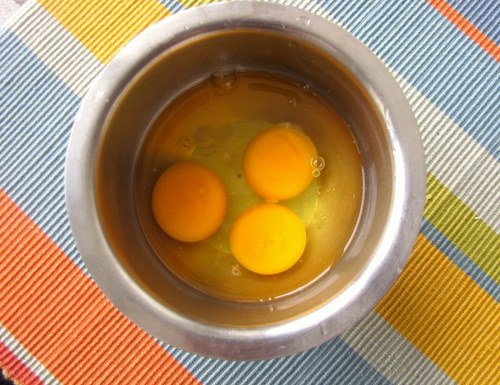
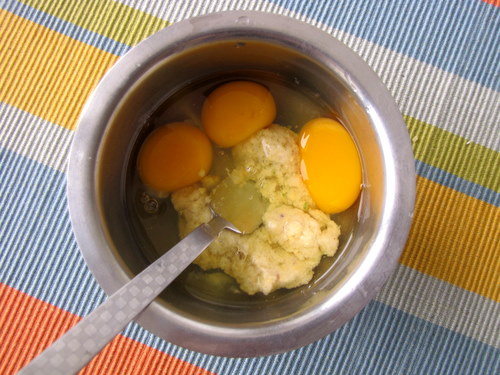
4. Break the eggs into a bowl.


5. Add the ground lentil paste.


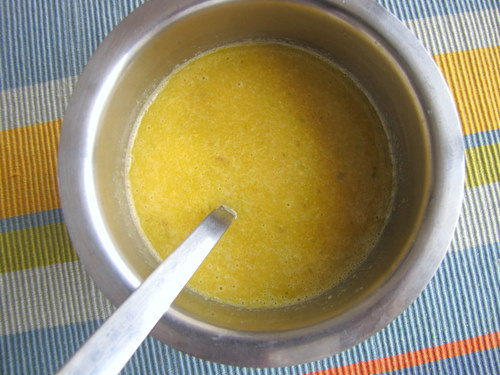
6. Beat well for a minute with salt.


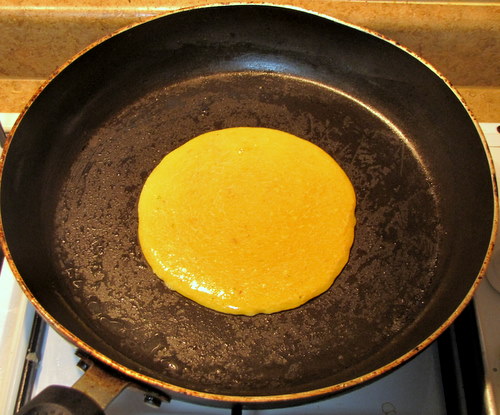
7. Make into small omelettes by pouring 2 tbsp of the egg mixture at a time onto a lightly oiled pan.


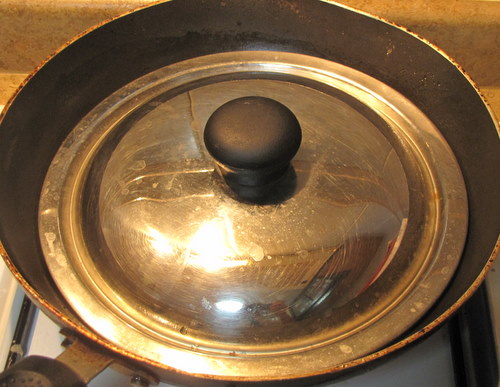
8. Cook closed to maintain softness.


9. Flip over when one side is browned.


10. You should get about 5-6 omelettes with this quantity of ingredients.


11. Phew, ok last step. Dunk in the omelettes in the prepared gravy and serve after an hour or two with steamed rice.

Wednesday, March 10, 2010

Broccoli Koottu Recipe

TH and I both love Broccoli. I have no clue why its shown as the vegetable of nightmares in cartoons and comics and what not. Maybe because we didn't grow up on it.

I also love the fact that it cooks super fast. Usually, I make a stir fry with mushrooms and broccoli, or add it to noodles or even pulao.


Last week I was on the phone with amma and she mentioned how her bedhamma (amma's amma) makes a koottu with cauliflower stems. Usually we discard the thick stems but since theirs was a joint family and a big household, they would save up all the stems and make a koottu with just that later on. What a lovely idea!

My mom makes koottu with moong dal that's been roasted a golden brown. In fact, she recommends that I roast moong dal as soon as I buy it and store it that way so that no bugs or ants enter the jar and it lasts forever. 

I decided to take the lone broccoli I had in the fridge and make a koottu with it, stem and all. Easy decision there.

Here's how. 

Broccoli Koottu Recipe

What I Used:

1 broccoli
1/4 cup dry-roasted moong dal / cherupayar
1/4 cup grated coconut or to taste
1/4 cup shallots
3 green chillies
1/2 tsp jeera / jeerakam
A pinch of turmeric powder

To temper:

2 tsp oil (I used coconut oil)
1/4 tsp mustard seeds
4 shallots, chopped
A few curry leaves

How I Made It:

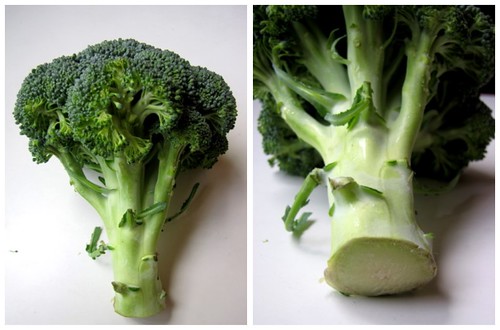
1. Cut the broccoli florets out first. Peel off the thick skin on the stem and chop the rest into small pieces. Wash and set aside.

2. Grind the coconut coarsely with the shallots, jeera, green chillies and turmeric. Don't add any water to it.

3. Heat oil for tempering and add the rest of the ingredients. Once the mustard seeds pop and the shallots turn transparent, add the ground coconut and fry for a minute. To this, add the moong dal, 1/2 cup water and cook closed on a low fire for 10-12 mins.

4. Check the moong dal to see if its soft and add the broccoli with some salt. Cook on an open fire until the broccoli is soft. We like it semi-soft so I cooked it for lesser time. Adjust according to your liking.

Serve warm with rice and some curry.

Wednesday, November 18, 2009

Chakkakkuru Aviyal / Jackfruit Seeds Aviyal Recipe


I love chakkakkuru! As I had posted earlier in my Jackfruit seeds in Lentils recipe, its not easy to get it here in Singapore. But the story is entirely different in Kerala. My mom usually has an entire ripe jackfruit sent to her by friends of the family and it will be waiting, ripe and fragrant in the kitchen corner, ready to be attacked. Fresh slices are eaten then and there and the leftovers stored away to make chakka varatti and kumbil appam and what not.

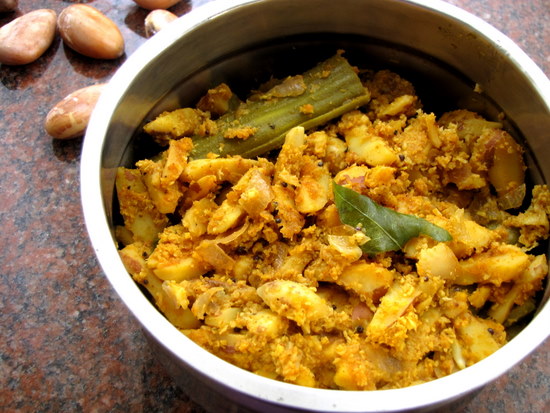
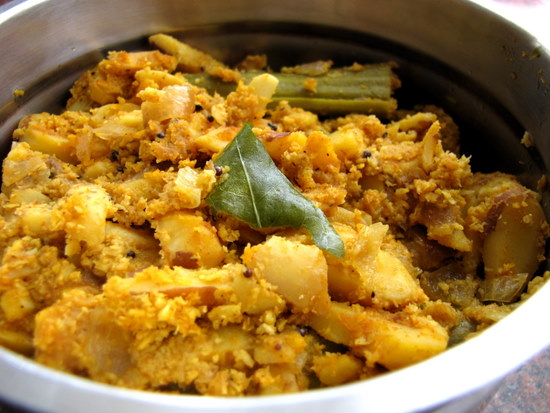
The seeds are, of course, collected and sun dried before it goes into dishes like aviyal and mezhukkupuratti. Chakkakkuru aviyal is my absolute favourite and this time when I went to Kottayam, amma made it for me. This is her recipe and the picture was taken in Kottayam in amma's rustic old steel bowl.
Chakkakkuru Aviyal Recipe
Serves: 4 as a side dish

What Is Needed:

20 Jackfruit seeds/Chakkakkuru
1 drumstick, cut into 3" pieces
1 cup grated coconut
8-10 small onions/shallots sliced long
2 cloves crushed garlic
3/4 tsp red chilli powder
1/4 tsp turmeric powder
1/4 tsp jeera/cumin powder

To temper:

2 tbsp oil, preferably coconut oil
1/4 tsp mustard seeds
A few curry leaves

How Its Made:

1. Soak thejackfruit seeds in water for at least 2 hours and scrape the brown skin off. Chop each into four.

2. Place the jackfruit seeds, drumsticks, half the sliced shallots, turmeric powder, chilli powder and jeera powder in a pan with 1 cup water. Cook on medium heat until the drumsticks and jackfruit seeds turn soft (not mushy). This will take about 10-12 mins depending on the seeds you are using. Add water if the mixture gets too dry.

3. Once this gets cooked, add the coconut and garlic and cook on low heat for another 5 mins until well combined. Add salt. At this time, the aviyal will be quite dry.

4. Heat oil in a pan and add the ingredients for tempering. Once the mustard seeds pop, add to the aviyal, mix well and serve.
Serve with warm rice and curry of your choice. My mom's version of the aviyal is more dry and that's the way I like it. When she makes the more popular chakkakkuru maanga aviyal / jackfruit seeds and tender mango aviyal, it is more watery and the colour/flavour is significantly different.

Tuesday, November 3, 2009

Mullangi Sambar / Radish Sambar Recipe

A trip to Little India is always much looked forward to, especially because of the fresh and cheap 'Indian' vegetables that are available in every nook and corner of the place. A typical trip to Little India will comprise of a 1-hour long elbowing through the grocery section of Mustafa, a good Indian dinner at Murugan Idli Kadai, Anjappar or one of those super-crowded Indian restaurants in Little India.

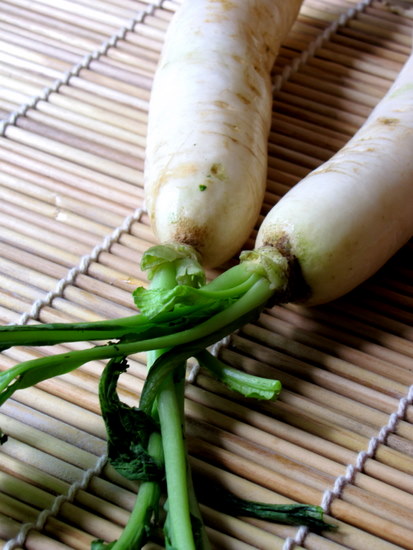
The last time we went, I saw some freshly dug up radishes in the Indian vegetable store (this pic was taken 3 days after the shopping day so the shoots have wilted) and I had to buy them. I was thinking mooli paratha when I bought some, but the moment TH saw them, he said "ahh, we can have some nice mullangi sambar tomorrow!"

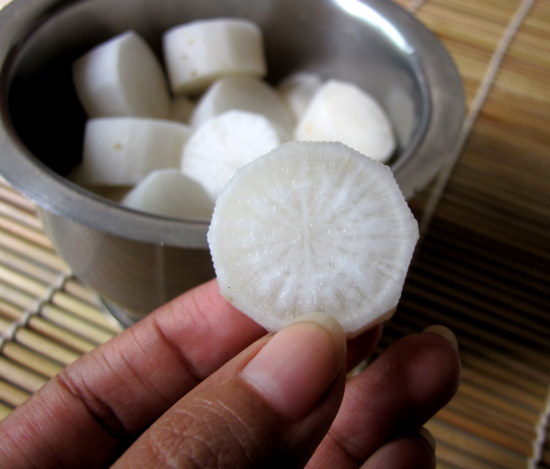
So mullangi sambar it was! Check out the lovely patterns on the radish pieces, they are so pretty!

Sambar is a very popular South Indian dish that is primarily toor dal and tamarind pulp and sambar powder (a blend of spices, sambar powder recipe here). Depending on what vegetable(s) you add to it, the flavour changes. In Kerala, there is only one kind of sambar because we believe in using mixed vegetables in it and this joins the other curries and theeyals that we keep rotating through the week.

In Tamil Nadu, the story is entirely different since sambar is often made on a daily basis and the vegetables rotated for some variation. Arachuvitta sambar is one of those variations that also has coconut added for a kick.

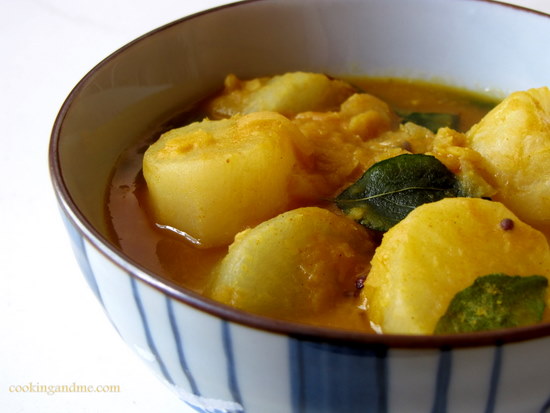
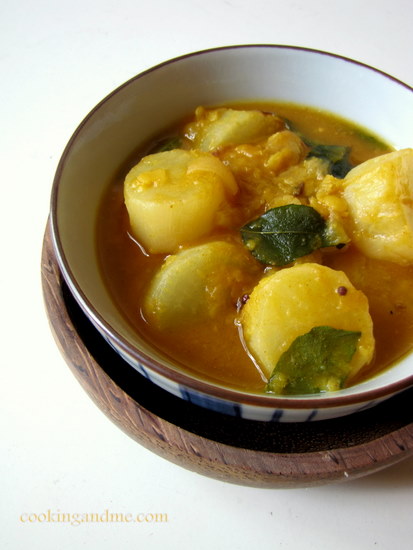
This is the first time I am making and tasting mullangi sambar and let's just say the radish added a lovely flavour to the versatile sambar!

Mullangi Sambar / Radish Sambar Recipe
Preparation time: 30-40 mins
Serves: 4

What I Used:

1 cup toor dal
2 white radishes, cut into 1" thick discs
8-10 shallots / pearl onions (or 1 red onion cut into chunks)
1 lime-sized ball of tamarind
1 tbsp sambar powder
1 generous pinch of hing / asafoetida / perungaayam
1 pinch of turmeric powder
1/4 tsp sugar or 1/2 tsp grated jaggery

For tempering:

1 tbsp oil or ghee
A few curry leaves
2 shallots/pearl onions cut into long slivers
1/2 tsp mustard seeds
1/2 tsp jeera / jeerakam / cumin seeds

How I Made It:

1. Pressure cook the toor dal with 2 cups water, the radish pieces and pearl onions for 3 whistles. Make sure that you regulate the cooking time depending on your cooker because otherwise the radish will get mushy and mix with the dal. Mine's an ooold cooker so no risk of that ;)

2. Soak the tamarind in 1/2 cup warm water for 10 mins and extract the juice, discarding the pulp.

3. Once the pressure leaves the cooker, open and add the tamarind juice, turmeric, hing and sambar powder. Bring to boil on a medium flame, stirring gently just to mix the ingredients. If the sambar seems too thick at this point, add some water.

4. Let the sambar boil for about 7 - 10 mins until it all comes together and switch off fire.

5. Heat the oil/ghee for tempering and add all other ingredients. Once the mustard pops and the shallots turn a light brown, remove from fire and add to the sambar. Mix well.

6. Optionally, you can garnish with chopped fresh coriander leaves. This changes the flavour of the sambar and takes it in a different direction :)


Serve hot with steamed rice and appalam/vadaam.

Monday, October 12, 2009

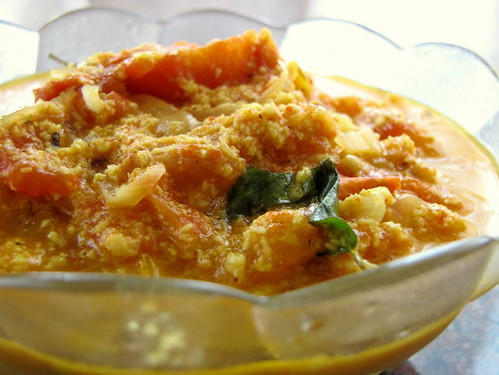
Thakkali Muringakka Aviyal Recipe / Tomato and Drumsticks in Coconut

I don't know if this a common Kerala recipe but ever since I can remember amma has been making this a quick side dish for Chicken Biryani. Her rationale is, biryani is intense and doesn't have coconut and any Malayali should know that we always pair curries with coconut and without coconut together, to balance the flavours.

Amma sent me the recipe through my uncle who typed it out while she listed the things to be done. The picture was taken in Kottayam when I was there this August and amma made it, not me :)

thakkali muringakka aviyal

Thakkali Muringakka Aviyal Recipe
Source: My mom
Preparation time: 30 mins

What Is Needed:

4 tomatoes, sliced into six long pieces
1 drumstick / muringakka, cut into 3" pieces
1/2 cup grated coconut
12 peeled shallots / chinna vengaayam / cheriya ulli
2 flakes garlic
1/4 tsp jeera / cumin seeds / jeerakam
1 tsp red chilly powder
A few curry leaves
1/4 tsp mustard seeds / kaduku
1 tbsp oil (preferably coconut oil)

How Its Made:

1. Add the chopped drumstick to about 1 cup water with with some salt and the chilly powder. Keep on a medium flame and cook until soft. The mixture shouldn't be too watery, so if it is, boil some more on a low flame.

2. To this, add the cut tomatoes and cook some more until the tomatoes begin to soften.

3. Grind together - coconut + jeera + garlic to a coarse paste.

4. Heat oil in a pan and add the mustard seeds. When they pop, add the shallots and curry leaves. Fry for about 2 mins, until the shallots soften.

5. Next, add the ground coconut paste and fry for another 1 min. To this, add the drumstick and tomatoes. Mix well. Simmer for 2-3 mins until well combined. Adjust salt.

Serve hot with steamed white rice or chicken biryani.

Wednesday, August 12, 2009

Click Entry - August '09

This month, I managed a new picture for Click and also learnt a new food-related word - Allium.

Shallots and Garlic
(because I am too lazy to think up a snazzy name for the picture)